I recently came across a headline that stopped me cold.
"Variety's 'Sinners' Headline Controversy Feels Like a Gut Punch to Black Cinema."
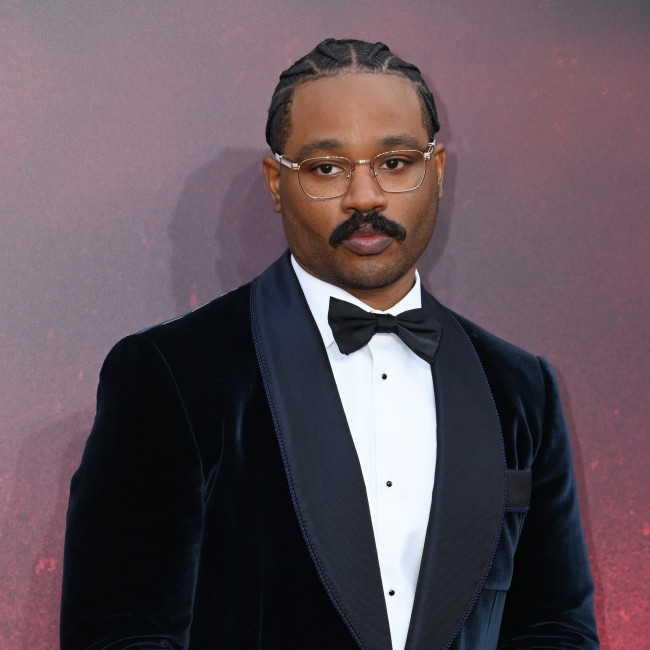
The piece unpacked the backlash surrounding Variety's coverage of Sinners — Ryan Coogler's Black-led film that, like so many before it, was met with a tone and level of scrutiny that rarely appears when white-led projects underperform. The kind of scrutiny that shows up specifically when Black creativity succeeds in ways that make certain people uncomfortable.
And I want to be clear: this is not about one film or one headline.
This is about a pattern. A long, exhausting, completely predictable pattern.
It's the way stories from Black creators are questioned before they're celebrated. Picked apart under expectations we never agreed to and never signed off on. Called "too niche" while nearly identical stories from other communities are praised as "universal." Called "raw" as a criticism while the exact same quality earns other filmmakers the label "gritty," "authentic," or "bold."
We have been here before. We will be here again.
At Fourth POV, Inc., we recognize this for exactly what it is — an extension of a system that has never fully valued our voices. A system that benefits from our creativity while simultaneously working to minimize our ownership of it, our credit for it, and our right to define it on our own terms.
That recognition is part of why we exist.
We were founded on the belief that storytelling is more than self-expression. It is liberation. It is how communities preserve culture, reclaim history, and protect identity across generations.
For Black communities specifically, storytelling has always been resistance. Resistance to erasure. Resistance to misrepresentation. Resistance to the quiet, persistent pressure to make ourselves smaller so that others are more comfortable with our presence.
That is not a new fight. It is an old one. And it is still being fought — in film criticism, in publishing, in classrooms, and in every space where Black creative work is produced and evaluated.
That is why our mission is urgent.
We are not simply helping young people improve their reading levels or write cleaner sentences. We are helping them understand the power of their voice — and then placing real tools in their hands so they can use it.
We are building writers who understand that the act of telling their story is itself a political act. That putting their truth on paper is a form of ownership. That publishing their work — owning it, selling it, controlling it — is a direct response to every system that has tried to tell them their stories don't matter or don't sell or don't belong.
The Sinners controversy is a reminder that these systems are still operating. Still evaluating. Still finding creative ways to minimize what we build.
But it is also a reminder of why we do not wait for their approval.
We are not here to seek validation from institutions that have spent decades pushing us to the margins. We are not building Fourth POV to fit into someone else's definition of what literacy or creativity or value looks like.
We are building something of our own.
We are building it so that children from underserved communities — from Hartford, from every city where talent is abundant and opportunity is manufactured to be scarce — never grow up believing their stories are too much or not enough. So they never sit in a classroom wondering if there is a version of this world where someone who looks like them gets to be the author, the publisher, the creative director.
There is. We are building it.
Because when we write, we resist.
When we tell our stories with clarity and confidence and ownership, we reclaim something that has always been ours.
And when we teach our young people to do the same — we do not just change their lives.
We change the story.
Fourth POV exists to make sure that Black youth in underrepresented communities have access to the tools, the space, and the support they need to tell their stories — and own every word of them.